Michael Bell ¦ Design
Client: New York Department of Housing, Preservation and Development
Stateless Housing ι New York ι New York 2001-02 ι The market tendency to subdivide property in order to build low-density, single-family units is here coupled with an attempt to promote density and collective housing types. . . .
Stateless Housing was an attempt to define a new model of housing that combined the high-density, open space paradigms of early modernism with the single family house model common in the United States. The market tendency to subdivide property in order to build low-density, single-family units is here coupled with an attempt to promote density and collective housing types. The housing units are joined but individuated. The basic housing type employed is a triplex model—three units combined as a module. Each prototypical housing block contains four triplex modules and a higher-density duplex apartment building. The land underneath is left open so that natural vegetation can flourish.
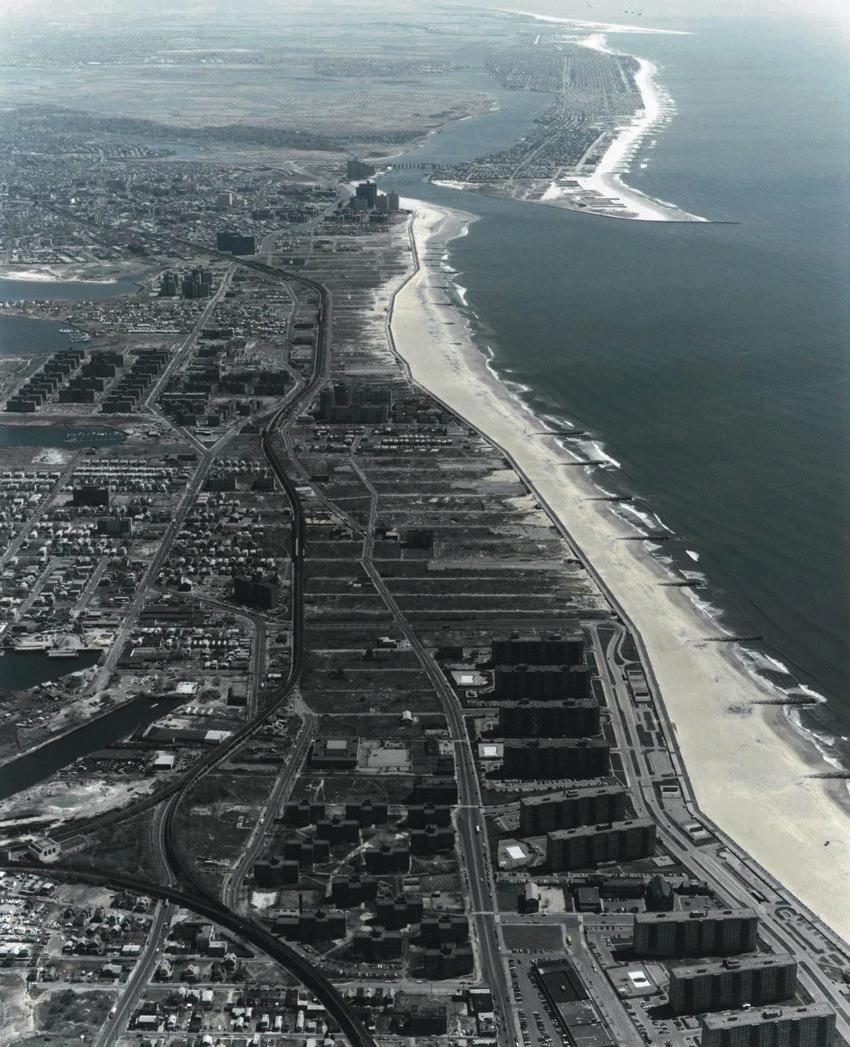
16 Houses was supported for both its architectural content and as a model for collaboration between institutions whose efforts are multiplied by shared information and specialization. It also served as a model of institutional collaboration that the Architectural League of New York and the New York Department of Housing Preservation Development relied on this year in forming a research and exhibition project to explore the redevelopment of a 100-acre city owned site on the Rockaway Peninsula in Queens. The Architectural League and the HPD chose to fund four university- based teams to explore how market-rate housing could be inserted into a fragmented urban fabric whose margins are formed by three eras of public housing. The 100-acre ocean front parcel on the Rockaway Peninsula was cleared in 1968 as one of
The last major urban renewal projects in New York City and never redeveloped. Today it is an ecologically and politically unstable site that will be redeveloped as 1800 units of new market rate housing. In this context we designed a project, titled Stateless Housing, whose title refers to the literal states withdraw from subsidized housing in this area as well as the organic and ecological qualities of the ocean front site. As a result of this collaborative model the HPD is now considering hiring architects and planners prior to developers thus placing design as well as ecological issues on a more even playing field with finance. The Architectural League and the HPD relied on 16 Houses as a model that renewed former roles of the university taking a substantial lead in social and politically sensitive urban redevelopment. 16 Houses and Stateless Housing establish bridges between professional practice, the university and the community at a level of engagement that does not diminish the complexity of either realm. The work attempts to renew the effectiveness of architecture and the university but indeed any local component of urbanism. It has been an attempt to bring a generation of urban theory into a contemporary and pragmatic realm. The expansion of the United States economy in the 1990’s has been the inevitable impetus for this engagement architecture’s critical role has always bridged art and economics and these works attempt to redefine the malleability of this conflation.
Project Team: Michael Bell, Anthony Burke, Alex Phifer, John Mueller
|